
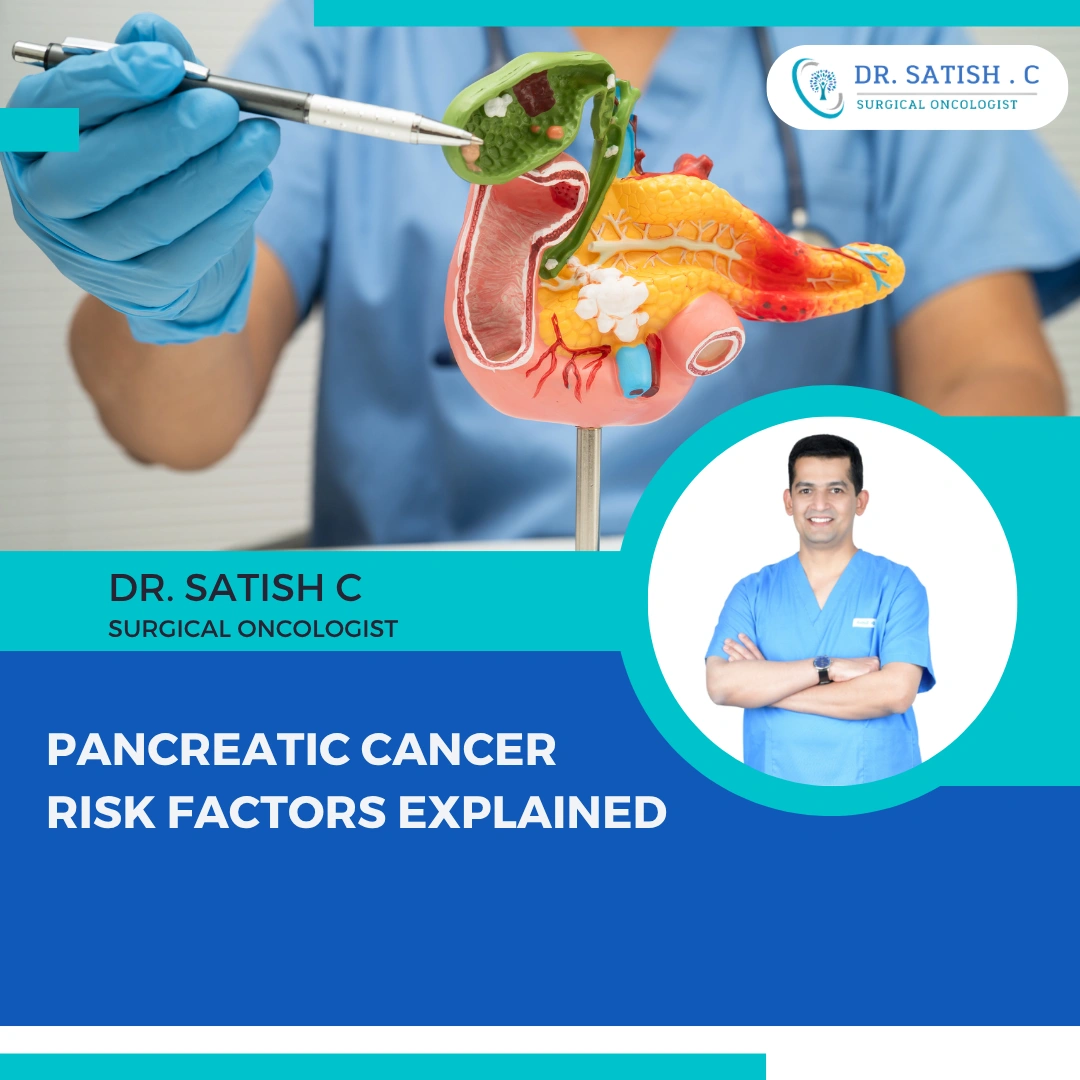
Pancreatic cancer can be difficult to detect in its early stages because its symptoms may not always be obvious. Understanding the factors that may increase the risk can help people recognise warning signs and seek medical evaluation when necessary. Consulting a Pancreatic Cancer Doctor in Bangalore can help patients understand their individual risk factors and appropriate evaluation.
In this video, Dr. Satish C, Surgical Oncologist, explains the major risk factors associated with pancreatic cancer, who may be at higher risk, and why recognising potential warning signs early can be important.
Pancreatic cancer develops when abnormal cells in the pancreas grow uncontrollably. The pancreas plays an important role in digestion and blood sugar regulation. Because the pancreas is located deep within the abdomen, early changes may sometimes go unnoticed.
Several factors may increase the likelihood of developing pancreatic cancer. Having a risk factor does not mean a person will definitely develop cancer, but understanding these factors can help with appropriate medical awareness.
1. Increasing Age
The risk of pancreatic cancer generally increases with age, with many cases occurring in older adults.
2. Smoking
Smoking is an important preventable risk factor associated with pancreatic cancer. Avoiding tobacco can help reduce the risk and offers several other health benefits.
3. Family History and Genetics
People with a close family history of pancreatic cancer or certain inherited genetic conditions may have an increased risk. Individuals with significant family history should discuss their risk with a healthcare professional.
4. Chronic Pancreatitis
Long-term inflammation of the pancreas, known as chronic pancreatitis, may increase the risk of pancreatic cancer. Appropriate management and regular medical follow-up can be important for people with this condition.
5. Diabetes and Obesity
Certain patterns of diabetes and excess body weight have been associated with an increased risk of pancreatic cancer. Maintaining a healthy lifestyle can contribute to overall health and may help reduce several cancer-related risk factors.
Not all cases of pancreatic cancer can be prevented because some risk factors, such as age and inherited genetics, cannot be changed. However, avoiding tobacco, maintaining a healthy weight, staying physically active, and managing existing health conditions can support overall health.
People with a strong family history or known inherited risk may benefit from discussing appropriate surveillance or genetic counselling with a specialist.
A Surgical Oncologist in Bangalore can evaluate concerning symptoms and help determine whether further investigations are required based on a person’s medical history and risk factors.
Conclusion
Understanding pancreatic cancer risk factors can help people make informed decisions about their health and recognise when professional evaluation may be appropriate. While some risk factors cannot be changed, avoiding tobacco and maintaining a healthy lifestyle can support overall well-being. If you have concerns about pancreatic cancer or your individual risk, consulting a Pancreatic Cancer Doctor in Bangalore can help guide the next steps.
FAQ's
Some pancreatic cancers are associated with inherited genetic changes or family history. However, most cases are not directly inherited.
Yes. Smoking is an established risk factor, and quitting can reduce the health risks associated with tobacco use.
Diabetes and pancreatic cancer can have a complex relationship. Certain patterns of diabetes may be associated with an increased risk, particularly in older adults.
Yes. A strong family history may increase risk, especially when multiple close relatives are affected or certain inherited genetic conditions are present.
Persistent or unexplained symptoms, significant family history, or concerns about personal risk should be discussed with an appropriate medical specialist.