
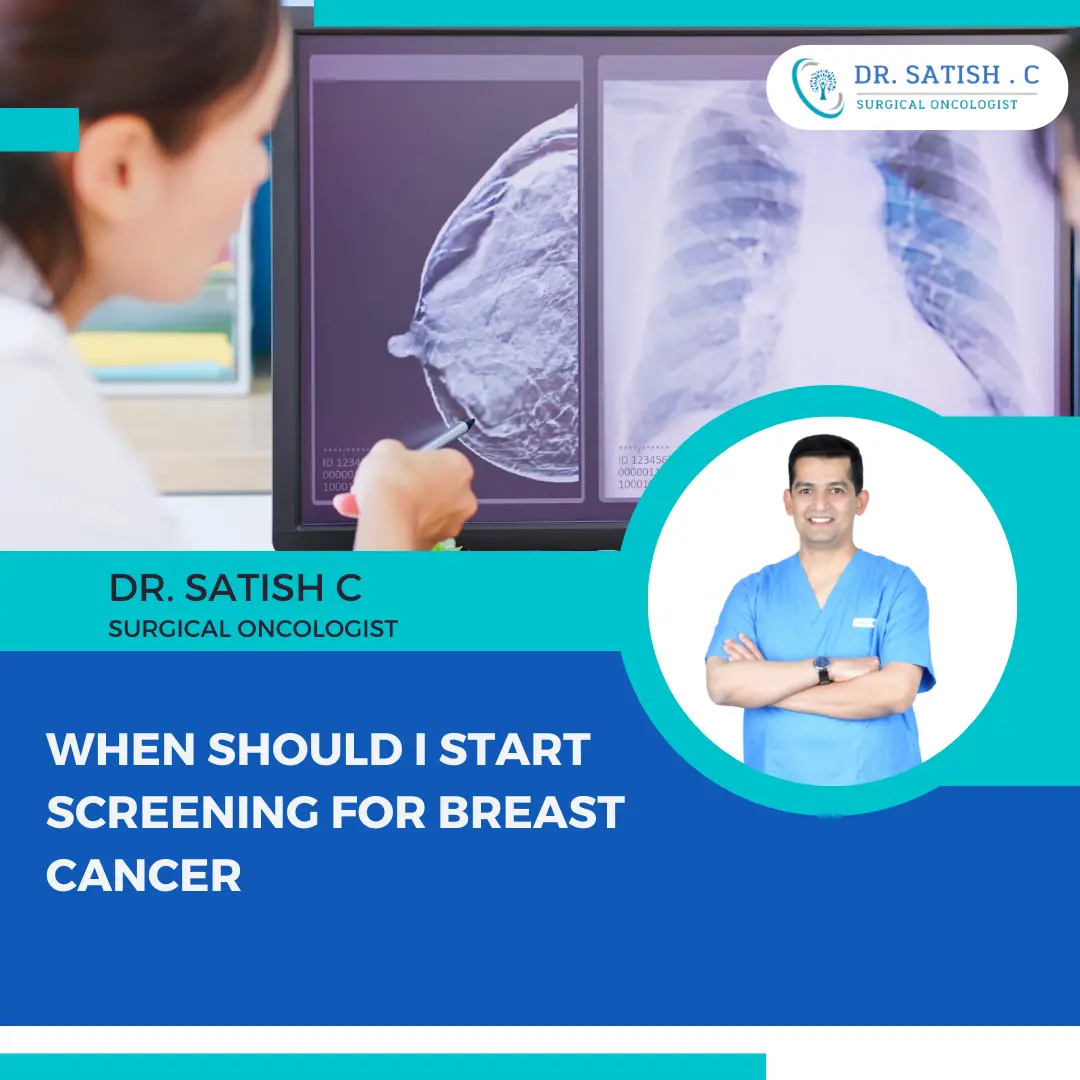
Breast cancer screening plays a crucial role in early detection and successful treatment. Many women are unsure about the right age to begin screening and how often it should be done. As a Breast Cancer Surgeon in Bangalore, Dr. Satish C emphasizes that timely screening can significantly improve outcomes and even save lives.
Why Early Screening Matters
Breast cancer often develops without noticeable symptoms in its early stages. Screening helps detect abnormalities before they become serious, allowing for less invasive treatments and better recovery rates.
Recommended Age to Start Screening
1. Women in Their 20s
- Perform regular breast self-examinations (BSE) once a month
- Be aware of any unusual changes like lumps, pain, or discharge
2. Women Aged 30–39
- Clinical breast examination by a doctor every 1–3 years
- Continue monthly self-examinations
3. Women Aged 40 and Above
- Annual mammograms are recommended
- Yearly clinical breast examinations
4. High-Risk Individuals
If you have a family history of breast cancer, genetic predisposition, or other risk factors:
- Screening may begin earlier (sometimes before 40)
- More advanced tests like MRI may be advised
Consulting a Breast Cancer Surgeon in Bangalore helps tailor a screening plan based on individual risk.
Signs You Should Never Ignore
- A lump in the breast or underarm
- Changes in breast shape or size
- Nipple discharge (especially bloody)
- Skin dimpling or redness
- Persistent breast pain
Even if you are below the recommended screening age, these symptoms require immediate medical attention.
Types of Breast Cancer Screening
- Mammography: Primary screening tool for early detection
- Ultrasound: Useful for younger women with dense breast tissue
- MRI: Recommended for high-risk patients
- Clinical Breast Exam: Performed by a healthcare professional
Tips for Effective Screening
- Schedule screenings regularly and don’t delay
- Maintain a record of your reports
- Follow your doctor’s personalized advice
- Lead a healthy lifestyle to reduce risk factors
FAQs
1. Can I get breast cancer at a young age?
Yes, although less common, breast cancer can occur in younger women. Awareness and self-exams are important.
2. Is mammography painful?
It may cause mild discomfort, but the procedure is quick and highly effective.
3. How often should I do a breast self-exam?
Once a month, ideally a few days after your menstrual cycle ends.
4. Do I need screening if I have no symptoms?
Yes. Screening is meant to detect cancer before symptoms appear.
5. What if I have a family history of breast cancer?
You may need earlier and more frequent screening. Consult a specialist for guidance.
Conclusion
Knowing when to start breast cancer screening can make a life-changing difference. Early detection increases treatment success and provides peace of mind. If you are unsure about your screening schedule, consult a Breast Cancer Surgeon in Bangalore to create a plan tailored to your health needs.