Thyroid cancer develops in the thyroid gland, a small butterfly-shaped gland located at the front of the neck. While many thyroid nodules are not cancerous, certain thyroid cancers require timely evaluation and appropriate treatment. Understanding the basics can help patients approach thyroid health with greater awareness. A Top Thyroid Cancer Surgeon in Bangalore can assess thyroid nodules, investigate suspicious findings, and discuss suitable treatment options when cancer is diagnosed.
In this video, Dr. Satish C explains five important facts about thyroid cancer, including how it can present, why thyroid nodules need proper evaluation, and why treatment decisions may vary from one patient to another.
Thyroid nodules are relatively common, and most are not cancerous. However, some nodules may have features that require further evaluation.
Doctors may recommend tests such as a thyroid ultrasound and, when appropriate, a fine-needle aspiration biopsy to understand whether a nodule is suspicious.
The presence of a thyroid nodule alone does not mean that a person has thyroid cancer.
Some thyroid cancers may be discovered during an examination or imaging test performed for another reason. Others may present as a lump or swelling in the neck.
Depending on the situation, symptoms can include a growing neck lump, difficulty swallowing, changes in the voice, or enlarged lymph nodes in the neck.
Any persistent or unusual neck swelling should be evaluated by a healthcare professional.
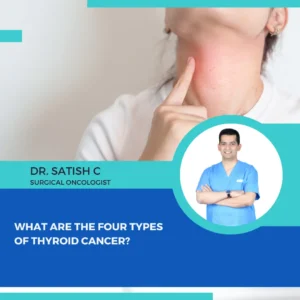
Thyroid cancer is not a single disease. The major types include papillary, follicular, medullary, and anaplastic thyroid cancers.
These types can behave differently and may require different approaches to evaluation and treatment. Factors such as the cancer type, size, location, spread, and overall health can influence treatment planning.
This is why treatment should be individualised rather than based only on the word “thyroid cancer.”
For many patients with thyroid cancer, surgery plays an important role in treatment. Depending on the disease, surgery may involve removing part or all of the thyroid gland, sometimes along with affected lymph nodes.
The extent of surgery is determined after assessing the cancer and surrounding structures. A Surgical Oncologist in Bangalore can help evaluate the disease and discuss the appropriate surgical approach.
Not every patient requires the same type or extent of surgery.
Completing treatment does not always mean that follow-up can be stopped. Depending on the type and stage of thyroid cancer, patients may need periodic clinical assessments, blood tests, ultrasound examinations, or other investigations.
Follow-up allows doctors to monitor thyroid hormone levels and check for any evidence of persistent or recurrent disease when appropriate.
Conclusion
Knowing the facts about thyroid cancer can help patients understand why a thyroid lump or nodule should be evaluated properly and why treatment decisions need to be personalised. From diagnosis and biopsy to surgery and follow-up, each step depends on the individual characteristics of the disease.
If you are looking for a Top Thyroid Cancer Surgeon in Bangalore, a specialist can help assess suspicious thyroid conditions and discuss appropriate treatment options. A Surgical Oncologist in Bangalore can also provide guidance when surgical treatment is being considered.
FAQ's
No. Most thyroid nodules are benign, but some may require further investigation based on their clinical and ultrasound features.
Many thyroid cancers are highly treatable, particularly when detected at an earlier stage. Treatment and outcomes vary depending on the type and extent of the disease.
Not necessarily. Treatment depends on factors such as cancer type, size, location, stage, and individual patient considerations.
Some thyroid cancers can recur, which is why appropriate follow-up is important. The risk varies according to the type and characteristics of the cancer.
Patients with a suspicious thyroid nodule or diagnosed thyroid cancer may be referred to appropriate specialists, including an endocrinologist, thyroid surgeon, or surgical oncologist depending on their individual situation.