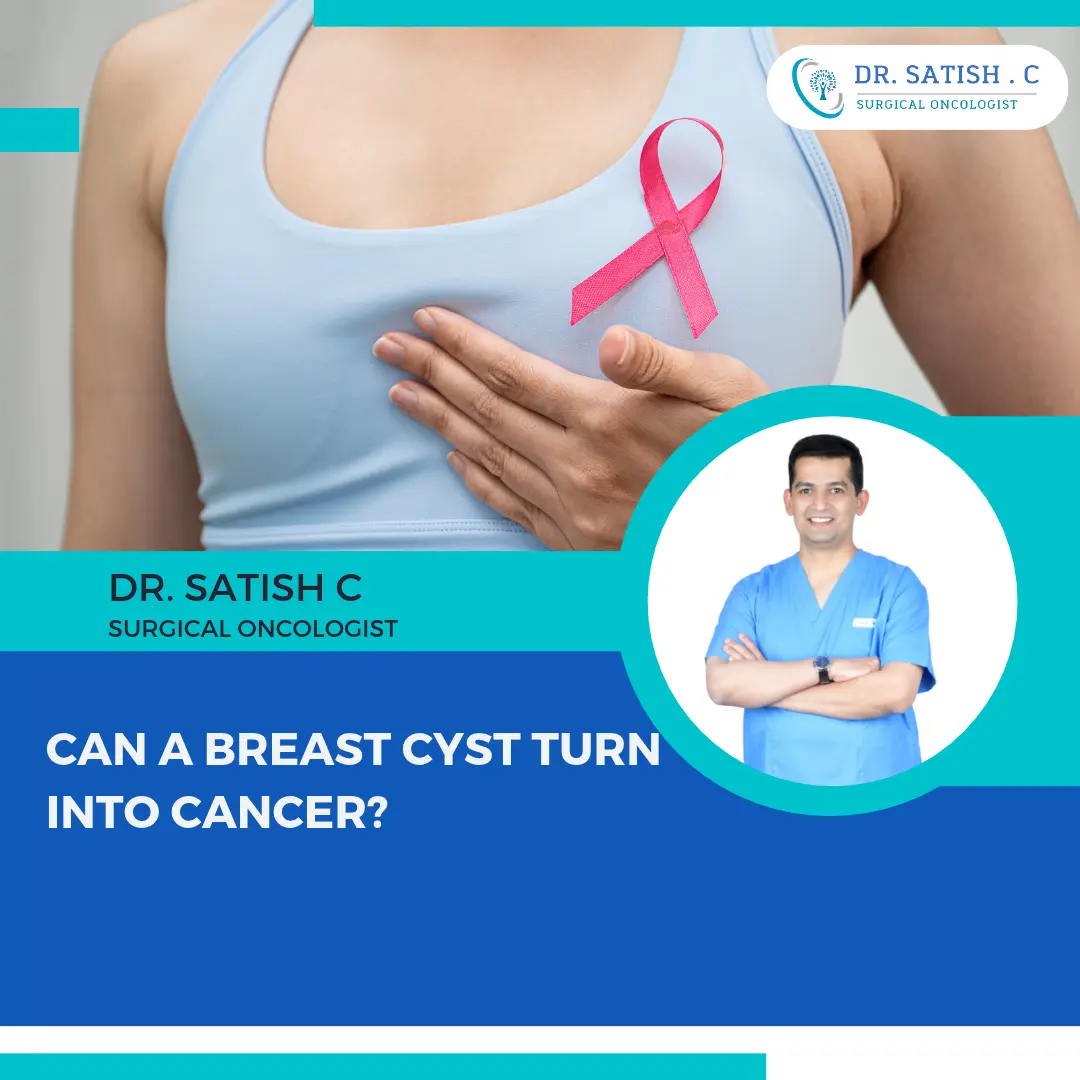
Discovering a lump or cyst in the breast can make many women worried, especially when they wonder whether it could develop into cancer. However, not every breast lump is cancerous, and most simple breast cysts are benign (non-cancerous). Understanding the difference between a breast cyst and a suspicious breast lump is important for making informed decisions about breast health. Consulting an experienced Breast Oncology Specialist in Bangalore can help women understand their breast changes, undergo appropriate investigations, and receive the right medical guidance.
In this video, Dr. Satish C, Surgical Oncologist, explains whether a breast cyst can turn into cancer, how breast cysts differ from cancerous lumps, and when women should seek medical evaluation.
A breast cyst is a fluid-filled sac that develops inside the breast tissue. It can occur in women of different ages but is particularly common among women between 35 and 50 years.
Breast cysts may feel like:
- Soft or firm, round lumps.
- Smooth lumps that move slightly under the skin.
- Tender areas that become uncomfortable before menstruation.
- Lumps that change in size during the menstrual cycle.
Most simple breast cysts are harmless and do not require treatment unless they cause discomfort or other concerns.
This is one of the most common concerns women have after discovering a breast cyst.
Simple breast cysts are not considered precancerous and do not typically turn into breast cancer. However, not every breast lump is a simple cyst.
Complex cystic masses or cysts with suspicious solid components may require further evaluation to rule out other conditions. Therefore, it is important not to assume that every breast lump is harmless.
Although both conditions can present as a breast lump, there are important differences.
- Breast cyst: Usually a fluid-filled sac and generally benign.
- Breast cancer: Develops when abnormal cells grow uncontrollably in breast tissue.
- Simple cyst: Often has characteristic benign features on ultrasound.
- Suspicious lump: May require additional imaging or a biopsy for confirmation.
A physical examination alone may not be enough to distinguish between these conditions. Appropriate imaging and investigations help establish the diagnosis.
Doctors may recommend different investigations depending on the nature of the lump.
Common diagnostic methods include:
- Breast ultrasound: Helps determine whether a lump is fluid-filled or solid.
- Mammogram: Helps examine breast tissue and identify suspicious changes.
- Fine Needle Aspiration (FNA): A thin needle may be used to remove fluid from a cyst.
- Core Needle Biopsy: A tissue sample may be collected if imaging shows suspicious features.
These investigations help doctors understand the nature of the lump and decide whether further treatment is necessary.
American Cancer Society+2
Although most breast cysts are harmless, certain changes should not be ignored.
Consult a breast specialist if you notice:
- A new breast lump or a lump that is growing.
- Changes in the size or shape of the breast.
- Skin dimpling or unusual skin changes.
- Nipple discharge, particularly bloody discharge.
- A lump that persists or returns after treatment.
Remember, even if you have previously been diagnosed with a simple breast cyst, every new or changing breast lump deserves medical evaluation.
Do not delay medical evaluation because you assume that every breast lump is a cyst. A breast specialist can assess the lump, review imaging reports, and recommend further investigations when necessary.
Early evaluation helps distinguish benign breast conditions from suspicious changes and ensures that appropriate treatment is provided.
Conclusion
Finding a breast cyst can cause unnecessary anxiety, but it is important to understand that most simple breast cysts are non-cancerous. The key is to identify the type of cyst through appropriate medical evaluation rather than making assumptions based on how the lump feels.
If you notice a new breast lump or have concerns about an existing cyst, consult Dr. Satish C for proper assessment and guidance. An experienced Breast Oncology Specialist in Bangalore can help with accurate diagnosis and appropriate breast care. Consulting a Surgical Oncologist in Bangalore can also help you understand the available treatment options if further evaluation is required.
FAQ's
No. Most breast cysts are benign. Simple breast cysts do not increase breast cancer risk.
American Cancer Society+1
Simple breast cysts do not typically turn into cancer. However, complex cystic masses need proper evaluation.
Most simple breast cysts do not require surgery. If a cyst causes discomfort, fluid may be removed through needle aspiration. Surgery is considered only in selected cases.
Yes. Some breast cysts may disappear without treatment, while others may remain or return.
Ultrasound is useful for determining whether a lump is fluid-filled or solid. Depending on the findings, a mammogram or biopsy may also be recommended.