Thyroid cancer is one of the more treatable forms of cancer when detected early. Proper diagnosis plays a crucial role in identifying the condition, understanding its stage, and planning the most effective treatment approach. Patients seeking the Best Thyroid Cancer Treatment In Bangalore are often advised to undergo a combination of clinical evaluation, imaging tests, and laboratory investigations for accurate diagnosis and timely care.
What Is Thyroid Cancer?
Thyroid cancer occurs when abnormal cells develop in the thyroid gland, a butterfly-shaped gland located at the front of the neck. The thyroid helps regulate metabolism, heart rate, body temperature, and hormone balance.
There are different types of thyroid cancer, including:
- Papillary thyroid cancer
- Follicular thyroid cancer
- Medullary thyroid cancer
- Anaplastic thyroid cancer
Early diagnosis significantly improves treatment outcomes.
Common Symptoms of Thyroid Cancer
In many cases, thyroid cancer may not cause noticeable symptoms during the early stages. However, some people may experience:
- A lump or swelling in the neck
- Difficulty swallowing
- Hoarseness or voice changes
- Neck pain
- Persistent cough not related to infection
- Enlarged lymph nodes
Any unusual neck swelling should be medically evaluated.
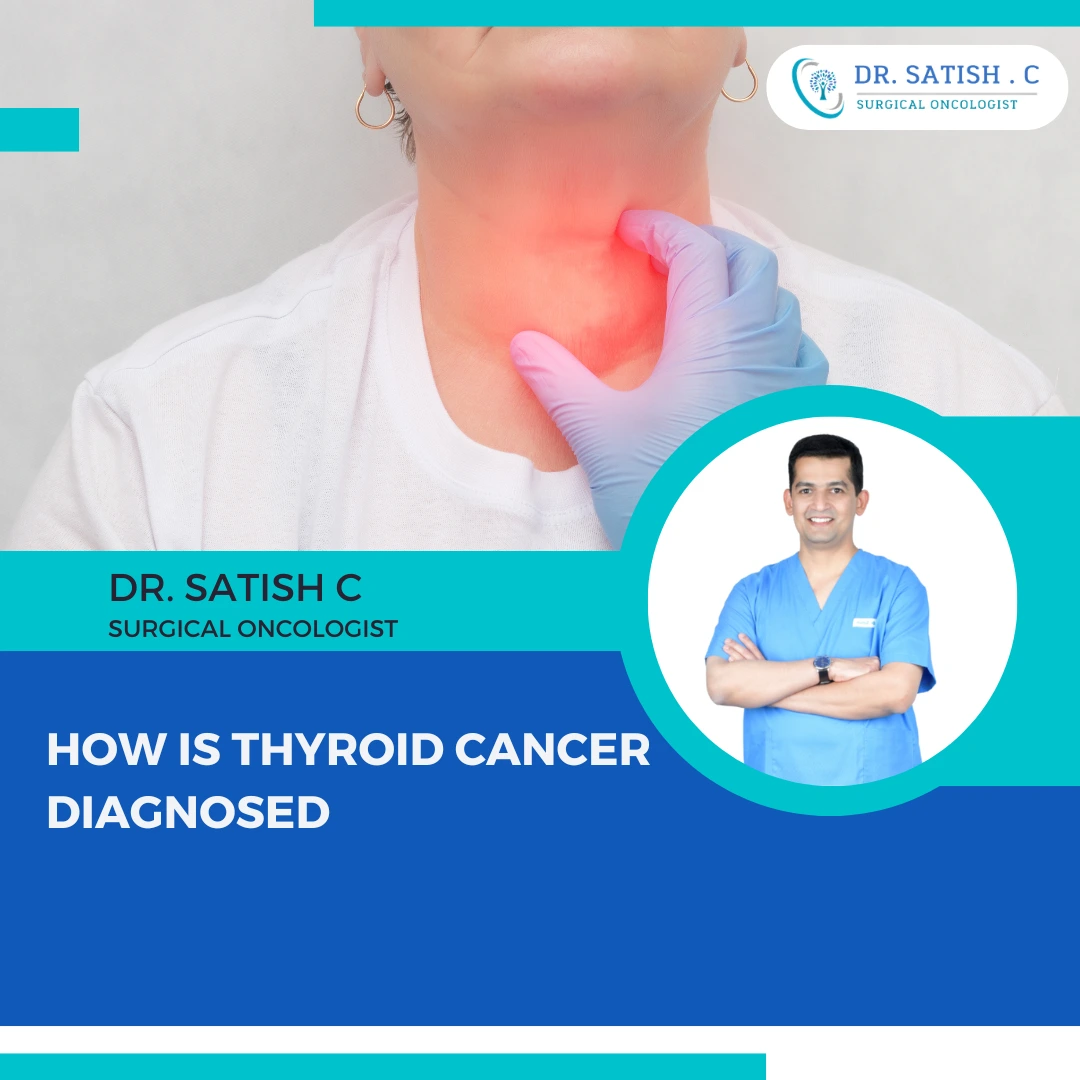
How Is Thyroid Cancer Diagnosed?
1. Physical Examination
The doctor checks for:
- Thyroid swelling
- Neck lumps
- Enlarged lymph nodes
- Changes in voice or swallowing
A detailed medical history is also reviewed.
2. Thyroid Function Blood Tests
Blood tests help evaluate thyroid hormone levels and overall thyroid gland function.
These may include:
- TSH (Thyroid Stimulating Hormone)
- T3 and T4 levels
- Calcitonin in certain cases
Blood tests alone cannot confirm cancer but provide useful information.
3. Ultrasound Scan
A thyroid ultrasound is one of the most important diagnostic tools. It helps determine:
- Size of the thyroid nodule
- Shape and appearance
- Presence of suspicious features
- Nearby lymph node involvement
Ultrasound is painless and non-invasive.
4. Fine Needle Aspiration Cytology (FNAC)
FNAC is commonly used to confirm thyroid cancer.
During this procedure:
- A thin needle is inserted into the thyroid lump
- Cells are collected for microscopic examination
FNAC helps determine whether the nodule is benign or cancerous.
5. Imaging Tests
Additional imaging may be recommended in some cases, including:
- CT scan
- MRI scan
- PET scan
- Radioactive iodine scan
These tests help evaluate the spread and staging of cancer.
6. Biopsy and Pathology Evaluation
If surgery is performed, tissue samples are analyzed in detail to confirm:
- Cancer type
- Tumor size
- Extent of spread
- Aggressiveness of the disease
This information guides treatment planning.
Importance of Early Diagnosis
Early detection of thyroid cancer offers several benefits:
- Better treatment success rates
- Less extensive surgery
- Reduced risk of complications
- Improved long-term survival
Regular medical check-ups and prompt evaluation of neck lumps are important.
Treatment Options for Thyroid Cancer
Treatment depends on the type and stage of cancer.
Common treatments include:
- Thyroid surgery
- Radioactive iodine therapy
- Hormone therapy
- Targeted therapy
- Radiation therapy in selected cases
A personalized treatment plan is usually recommended based on individual needs.
Frequently Asked Questions (FAQ)
1. What is the first sign of thyroid cancer?
A painless lump or swelling in the neck is one of the most common early signs.
2. Can blood tests detect thyroid cancer?
Blood tests help assess thyroid function but cannot alone confirm thyroid cancer.
3. Is thyroid ultrasound necessary?
Yes. Ultrasound helps evaluate thyroid nodules and detect suspicious changes.
4. What is FNAC in thyroid diagnosis?
FNAC is a needle test used to collect thyroid cells for microscopic examination.
5. Is thyroid cancer curable?
Many types of thyroid cancer are highly treatable, especially when detected early.
6. Are all thyroid nodules cancerous?
No. Most thyroid nodules are non-cancerous, but proper evaluation is important.
7. When should I see a doctor for thyroid symptoms?
You should seek medical advice if you notice neck swelling, difficulty swallowing, or persistent voice changes.Early evaluation and accurate diagnosis are essential for successful treatment outcomes. If you are searching for the Best Thyroid Cancer Treatment In Bangalore, consulting experienced specialists like Dr. Satish C can help ensure expert diagnosis, advanced treatment planning, and comprehensive cancer care.